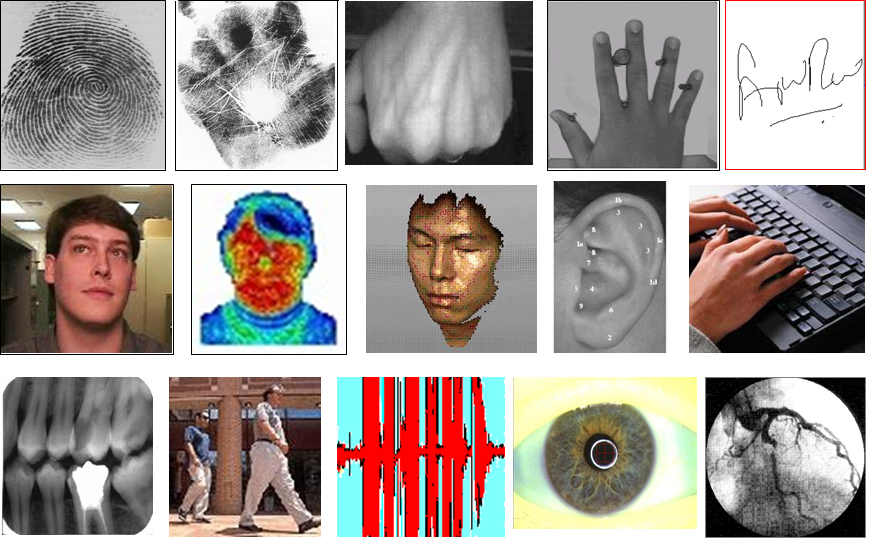
 Driving the need of stronger security, biometrics (e.g., face and fingerprint) is replacing traditional passwords and becomes the most preferred authentication approach in daily-life scenarios, including mobile applications, banking, and border security. The trend has led to an impressive upsurge in the industry's need to hire scientists and engineers with biometric computing skills. To harness the biometric technology and meet the increasing industry demand, biometrics and authentication have become a core part of the cybersecurity course curriculum.
Participants in this REU site will work at the north campus location of the University at Buffalo. REU undergraduate students across the nation will work with a group of experienced faculty members and industrial mentors, and conduct cutting-edge research in biometrics and authentication during the 10-week program. This REU site will provide a short-term intensive research training experience to a group of undergraduate researchers, prepare them for the research experience in the field of cybersecurity, and benefit their graduate applications and job opportunities. Particularly, REU site also allows students to dive into and learn sought-after skills in data processing, app/software development or machine learning. Through various activities such as hands-on projects, seminars, demos, presentations, field trips, and other professional development opportunities, undergraduate students will also enhance their professional skills. This REU site aims to broaden the participation of underrepresented students from institutions that offer limited or no research opportunities in Biometrics and Authentication.
REU participants will gain the quality training in technologies and career development, have opportunities to publish/present your research work in academic venues (e.g., journals or conference), and have at least $5,000 in stipends (including meal expense). The REU site will also provide 1) the lake-view on-campus housing, 2) relocation compensation and 3) trips to local sites and industry parks for the on-site REU participants.
- This program is funded under the SUNY Chancellor's Summer Researcher Excellence Fund and the U.S. National Science Foundation under Grant # CNS-2050910 (2021 - 2025) and Grant # CCF-2025 (2026 - 2029).
- U.S. Citizen or Permanent Resident
- Basic Programming Skills (e.g., Matlab, C/C++/C#, Python or Java)
- Preferred GPA: 3.0+
- Major field of study in all engineering and science related disciplines. Exception can be made for good candidates.
(Note: items a, b and c will be uploaded through the application link below)
- Resume (2-page limit)
- The Copy of College/University Transcripts
- Personal Statement (2-page limit)
- One letter of recommendation by authority (the recommender will email the letter to Dr. Wenyao Xu at wenyaoxu@buffalo.edu).
- Application Deadline: March 15, 2027 Apply Now!
- Acceptance Notification: April 1, 2027
- REU Participants Arrive on Campus/Participation: May 28, 2027
- REU Program Date: May 29, 2027 - August 6, 2027 (10 weeks)
- Dr. Wenyao Xu — wenyaoxu@buffalo.edu
- [1] "Cardiac Scan: A Non-Contact and Continuous Authentication System", ACM International Conference on Mobile Computing and Networking (MobiCom'17), Snowbird, Utah, USA, October 2017 [pdf] [Video1] [Video2] [Video3] [Video4]
- [2] "Brain Password: A Secure and Truly Cancelable Brain Biometrics for Smart Headwear", the 16th ACM International Conference on Mobile Systems, Applications, and Services (MobiSys'18), Munich, Germany, June 2018 [pdf]
| Category | Lecture Topic | Link |
|---|---|---|
| Fingerprint Biometrics | Fingerprint basics (must watch) | Watch |
| Fingerprint features in detail | Watch | |
| Face Biometrics | OpenCV Python: Face Detection | Watch |
| OpenCV Python: Face Recognition and Face Identification | Watch | |
| OpenCV | Learn OpenCV in 3 hours with Python | Watch |
| Classification | Machine Learning in Python: Classification | Watch |